
Asia Pacific is home to some of the world’s most ambitious low-carbon businesses. But mainstream Asian stock benchmarks barely capture the green economy. To highlight the companies making the shift, Corporate Knights has produced a new ranking of the 50 corporations leading the green transition in that part of the world.
The Asia Pacific 50 Most Sustainable Corporations ranking spotlights unique sustainability sectors throughout the eastern hemisphere: green finance and electric vehicles in China, wind power in India, hydroelectricity in New Zealand and advanced high-speed rail in Taiwan.
The average sustainable revenue among the companies on Corporate Knights’ Asia 50 ranking was 65.5%, notes Michael Yow, Corporate Knights’ director of rankings. By comparison, the iShares Asia 50 ETF, which tracks the S&P Asia 50 Index, had an average sustainable revenue of only 3.8%. “This disparity suggests that investors using conventional large-cap benchmarks may be significantly underexposed to companies generating revenue from sustainable economic activities, despite the growing materiality of sustainability-related risks and opportunities among Asian companies,” Yow says.
How the ranking was made
To compose the list, Corporate Knights researchers rank publicly listed companies with more than US$1 billion in revenue based on their sustainability performance. Three key questions guide their analysis: To what extent are a company’s investments geared toward sustainability? Where does its sustainable revenue come from? And how fast is its sustainable revenue growing?
To answer these questions, the Corporate Knights research group relies on three equally weighted indicators: the share of revenue from sustainable products and services; the share of investments directed toward sustainable projects; and what they call “sustainable revenue momentum,” which is the compound annual growth rate in sustainable revenue from 2022 to 2024. This last metric was introduced to the Corporate Knights sustainability rankings this year, to reflect the urgency of the energy transition and the shift to a green economy.
Companies can also earn a bonus of up to 5% for linking CEO pay to sustainability targets. Alternatively, they face deductions of up to 5% each for legal sanctions and workplace fatalities. Companies are benchmarked against industry peers across 64 groupings.
The top company for 2026
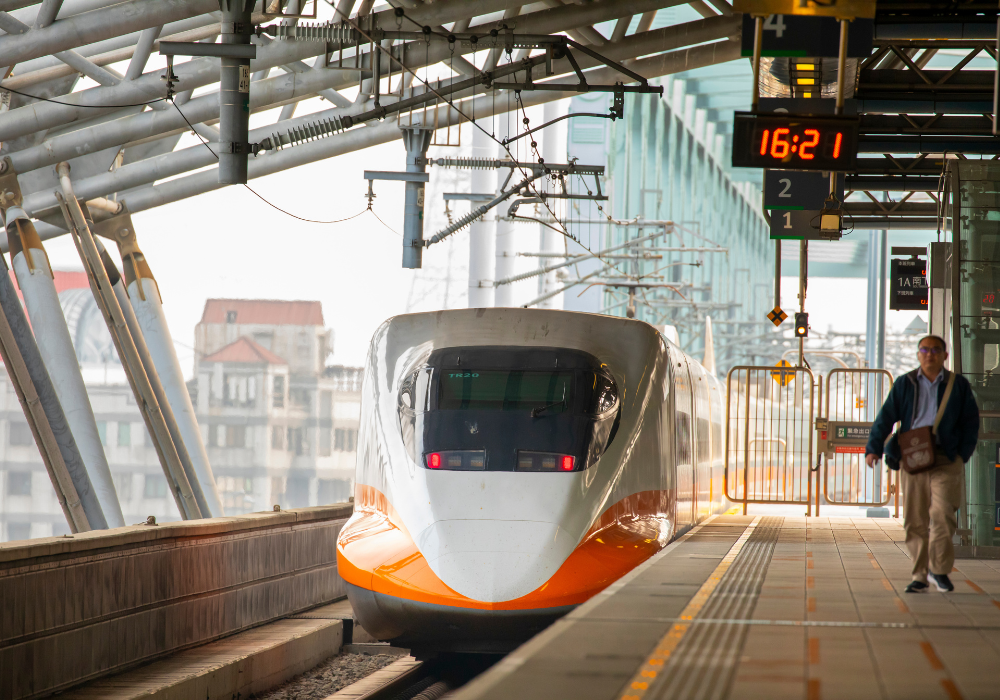
Taiwan High Speed Rail Corporation (THSRC) tops this year’s Asia 50 ranking – and not only because nearly all its revenues come from its low-carbon, high-speed rail service. Over the past year the company stepped up investments in its electrified network, completing major extensions, replacements and upgrades. Its revenue rose from 37 billion Taiwan dollars in 2022 to TWD 53 billion in 2024, driven by its consistently strong performance in the operation and management of its rail lines.
THSRC has ranked in the top 5% of listed companies in the Corporate Governance Evaluation, an annual assessment by the Taiwan Stock Exchange, for eight consecutive years, and has been a persistent selection for the FTSE4Good TIP Taiwan ESG Index, which tracks Taiwanese companies with stronger-than-average environmental, social and governance (ESG) performance, since 2018. It has also become a regular presence on the Corporate Knights Global 100, placing fifth in 2025 and 2026 and fourth in 2024.
THSRC’s inherently low-carbon business model is only part of the story: it also uses measurable and improving environmental key performance indicators for its energy consumption, water conservation and waste recycling – reports transparently in line with global standards. Even though its trains are all-electric, Taiwan’s grid is largely powered by coal and natural gas, so THSRC discloses its greenhouse gas emissions with third-party verification and works to cut its carbon intensity. THSRC has also installed solar panels at some of its stations and depots to reduce the carbon footprint of its operations.
RELATED STORIES

But THSRC isn’t the only company that stands out from the list. Looking closely at the inaugural Asia Pacific 50 Most Sustainable Corporations, several stories emerge.
The fast track
Among the three companies with the highest sustainable compound annual growth rate (CAGR), one finances renewable-energy generation and the other two make electric vehicles.
- Industrial Bank Co. Ltd. (#16), commonly known as CIB, significantly expanded its renewables portfolio over the past year, aggressively financing large-scale wind and solar projects under its “All-Green” strategy. Headquartered in Fuzhou, Fujian, CIB deploys green bonds and specialized credit lines to support China’s carbon-neutrality goals. The bank’s green loans are growing faster than traditional corporate loans, reflecting a strategic pivot toward sustainable infrastructure. As China’s first bank to adopt the Equator Principles for environmental and social risk management, CIB has prioritized clean energy over high-emission industries and integrated ESG metrics into its core credit-approval process. CIB’s sustainable revenue momentum stands out because while its sustainable revenue ratio is only 7%, its CAGR is 132%.
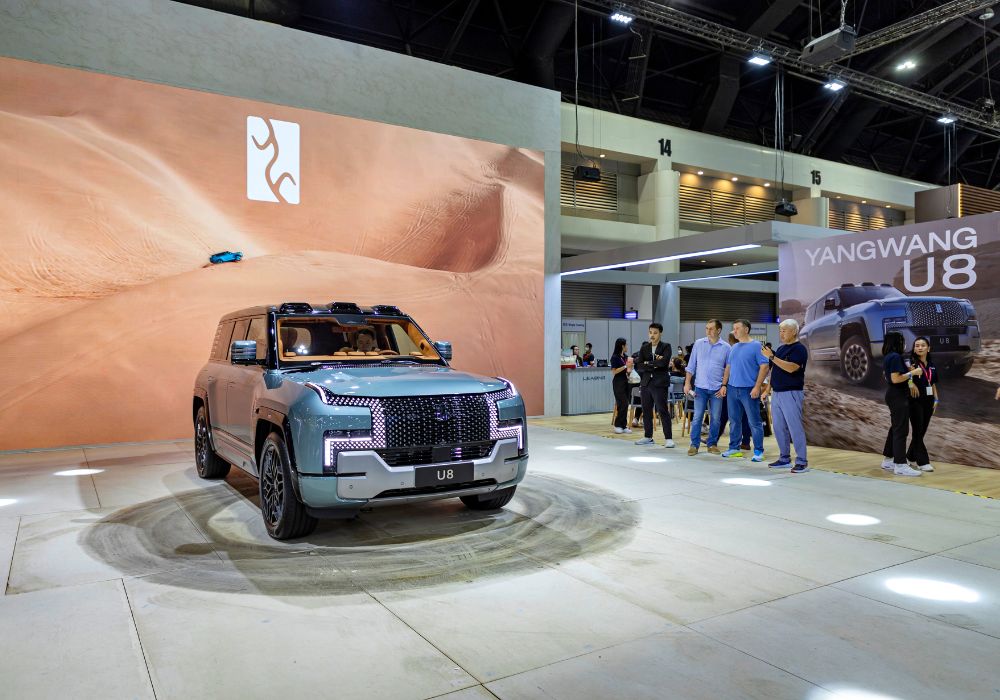
- Seres (#26) is part of China’s new crop of automotive stars, even though it was founded almost four decades ago. Based in Chongqing, the company started out making components for shock absorbers and household appliances. But in the mid-2010s, its parent company, now known as Seres Group, launched a vehicle-manufacturing arm, and in 2019 Seres rolled out its first EV, the SF5. Although that debut met with only muted market response, Seres has since partnered with Huawei Technologies to co-develop better-selling Aito-branded EVs. Seres saw its revenue increase in 2024 by more than 300%; this past year brought more strong performance, with higher margins and increased investment in research and development.
- Li Auto Inc. (#10) is coming off a hard year, which saw the pioneering EV company deliver 19% fewer vehicles than 2024. The downshift followed several years of high demand for its extended-range electric vehicles (EREVs), which carry small gas-powered engines to top up the battery, and where the carmaker had been an early leader. But as competition heats up and technology improves for more affordable battery-electric vehicles (BEVs), Li Auto is fighting to retain its leadership position. The company plans to double down on EREVs while still transitioning to BEVs.
The waste-to-wealth winner
Among companies at the forefront of the circular economy, the Australian supply-chain logistics company Brambles Ltd. (#9) stands out for its “share and reuse” system for pallets, crates and containers. This model eliminates the need for customers to purchase and manage their own equipment, instead allowing them to borrow standardized platforms and then return them for reconditioning and redistribution. The company’s pooling approach also offers a sustainability advantage: shared assets reduce the total number of pallets and containers in circulation, thereby cutting down on waste, deforestation and carbon emissions compared to traditional pallets and crates.
The transition enabler
Looking at banks with high sustainable lending, Taiwan’s Chang Hwa Commercial Bank Ltd. (#42) is exceptional, with a CAGR of 48% thanks to its marked increase in lending to renewable-energy, circular‑economy and low‑carbon-manufacturing projects. Chang Hwa has set a target to phase out investment and financing for coal and unconventional fossil fuels by 2040. Notably, this 120-year-old bank also ranked 42nd on the World’s Safest Banks 2025: Emerging Markets Top 50 by Global Finance, thanks to its strong balance sheet and conservative risk profile.
The long-game player
We looked for companies with small sustainable revenue but high sustainable investment to see who’s leaning hardest into the green shift. StarHub (#50) showed that targeted, long-term investment – not revenue growth alone – defines value. The Singapore-based telecommunications company has channelled capital into cloud transformation, renewable energy and cybersecurity, and backed this up with science‑based climate targets, long‑term renewable power-purchase agreements and executive pay tied directly to ESG performance.
The pure-play behemoth
When you’re near the ocean, you keep an eye out for whales. Likewise, on a ranking like this, it’s interesting to look out for the big pure-play companies with high sustainable revenue and investment. One major standout in the clean-energy revolution is LG Energy Solution (#14), the battery arm of LG Corp., which has grown its manufacturing business by securing long-term supply agreements with major global automakers including General Motors, Stellantis and Hyundai. LG now boasts joint-venture gigafactories in North America and Europe alongside Asia to meet surging demand. The company has also capitalized on the rapid global build-out of grid-scale and commercial energy storage, emerging as one of the leading suppliers for utilities and renewable projects.
| Rank | Name | Peer group | Country of headquarters | Final score | Global 100 rank |
|---|---|---|---|---|---|
| 1 | Taiwan High Speed Rail Corp | Transit and ground transportation | Taiwan | 96.7% | 5 |
| 2 | Beijing Energy International Holding Co Ltd | Power Generation | Hong Kong | 93.2% | #N/A |
| 3 | Suzlon Energy Ltd | Machinery Manufacturing | India | 92.6% | 10 |
| 4 | Meridian Energy Ltd | Power Generation | New Zealand | 88.3% | 11 |
| 5 | Sungrow Power Supply Co Ltd | Electrical equipment manufacturing | China | 87.8% | 12 |
| 6 | GEM Co Ltd | Waste Management | China | 84.3% | 15 |
| 7 | Xinyi Solar Holdings Ltd | Glass and ceramics | China | 83.3% | 17 |
| 8 | XPeng Inc. | Cars and trucks manufacturing, including parts | China | 80.8% | 20 |
| 9 | Brambles Ltd | Furniture and general manufacturing | Australia | 80.0% | 23 |
| 10 | Li Auto Inc | Cars and trucks manufacturing, including parts | China | 77.2% | 29 |
| 11 | NIO Inc | Cars and trucks manufacturing, including parts | China | 76.9% | 30 |
| 12 | Contemporary Amperex Technology Co Ltd | Battery manufacturing | China | 76.4% | 31 |
| 13 | Eisai Co Ltd | Pharmaceutical and biotech manufacturing | Japan | 74.4% | 36 |
| 14 | LG Energy Solution, Ltd. | Battery manufacturing | South Korea | 73.3% | 38 |
| 15 | Contact Energy Ltd | Power Generation | New Zealand | 72.9% | #N/A |
| 16 | Industrial Bank Co Ltd | Banks | China | 72.5% | #N/A |
| 17 | Zhejiang Leapmotor Technology Co., Ltd. | Cars and trucks manufacturing, including parts | China | 72.1% | 43 |
| 18 | Sims Ltd | Waste Management | Australia | 70.5% | 46 |
| 19 | Gotion High-tech Co Ltd | Battery manufacturing | China | 69.9% | 44 |
| 20 | Voltronic Power Technology Corp. | Electrical equipment manufacturing | Taiwan | 68.9% | 49 |
| 21 | MLS Co Ltd | Semiconductor and electronic components manufacturing | China | 68.5% | 52 |
| 22 | Mercury NZ Ltd | Power Generation | New Zealand | 67.2% | #N/A |
| 23 | Ecopro BM. Co., Ltd. | Battery manufacturing | South Korea | 66.7% | #N/A |
| 23 | Giant Manufacturing Co Ltd | Non-road transport equipment manufacturing | Taiwan | 66.7% | 58 |
| 23 | Yadea Group Holdings Ltd | Non-road transport equipment manufacturing | China | 66.7% | 58 |
| 26 | Seres Group Co.,Ltd | Cars and trucks manufacturing, including parts | China | 66.1% | 63 |
| 27 | Zhuzhou CRRC Times Electric Co Ltd | Electrical equipment manufacturing | China | 63.7% | #N/A |
| 28 | City Developments Ltd | Real estate and leasing | Singapore | 62.6% | 69 |
| 29 | Geely Automobile Holdings Ltd | Cars and trucks manufacturing, including parts | Hong Kong | 61.7% | #N/A |
| 30 | LG Chem Ltd | Refining, petrochemicals and basic organic chemicals | South Korea | 61.5% | 75 |
| 31 | Beijing Enterprises Water Group Ltd | Water and sewage treatment | Hong Kong | 60.1% | #N/A |
| 32 | Samsung Fire & Marine Insurance Co Ltd | Insurance companies | South Korea | 59.2% | #N/A |
| 33 | Chung Hwa Pulp Corp | Forest Products | Taiwan | 59.1% | #N/A |
| 34 | MMG Ltd | Mining, smelting and refining | Australia | 58.9% | 82 |
| 35 | DB Insurance Co Ltd | Insurance companies | South Korea | 57.7% | #N/A |
| 36 | Byd Co Ltd | Cars and trucks manufacturing, including parts | China | 57.7% | #N/A |
| 37 | Lenovo Group Ltd | Computers and peripherals manufacturing | Hong Kong | 55.5% | 86 |
| 38 | TCC Group Holdings Co Ltd | Cement, lime and concrete | Taiwan | 55.4% | 72 |
| 39 | Ricoh Co Ltd | Computers and peripherals manufacturing | Japan | 55.0% | 87 |
| 40 | Siemens Ltd | Electrical equipment manufacturing | India | 54.5% | #N/A |
| 41 | Shenzhen Inovance Technology Co Ltd | Electrical equipment manufacturing | China | 52.2% | #N/A |
| 42 | Chang Hwa Commercial Bank Ltd | Banks | Taiwan | 51.4% | #N/A |
| 43 | Tung Ho Steel Enterprise Corp | Steel making | Taiwan | 51.2% | #N/A |
| 44 | Hang Lung Group Ltd | Real estate and leasing | Hong Kong | 51.1% | #N/A |
| 45 | Kurita Water Industries Ltd | Water and sewage treatment | Japan | 51.0% | #N/A |
| 46 | Cheng Loong Corp | Packaging | Taiwan | 50.4% | #N/A |
| 47 | Asustek Computer Inc | Computers and peripherals manufacturing | Taiwan | 48.9% | 94 |
| 48 | Shimano Inc | Non-road transport equipment manufacturing | Japan | 48.8% | #N/A |
| 49 | East Japan Railway Co | Freight transport, all modes | Japan | 48.2% | #N/A |
| 50 | StarHub Ltd | Telecom providers | Singapore | 47.7% | #N/A |
The Weekly Roundup
Get all our stories in one place, every Wednesday at noon EST.