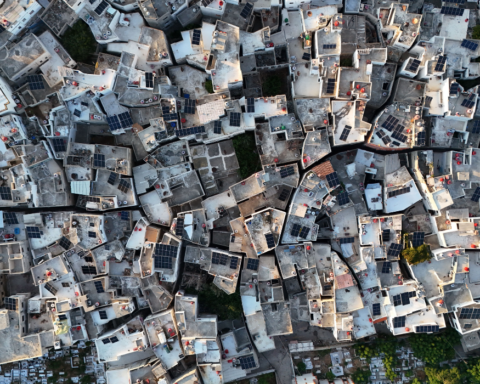
On September 20, 2017, Hurricane Maria tore through the small island of Puerto Rico, causing massive flooding and destroying thousands of homes. Nearly 6,000 people died in the storm. The power grid, which had been poorly maintained, collapsed.
The blackout would become the longest in U.S. history. Prior to Maria’s battering, Puerto Rico’s solar industry did a modest business.
That quickly changed. In the immediate aftermath of the storm, solar panel purchases soared. They became so ubiquitous that when Hurricane Fiona landed in 2022, the national grid operator launched a pilot program connecting batteries to residential panels for backup power in the event of future blackouts and as an alternative to using gas peaker plants.
Today, solar panels are installed on the rooftops of some 175,000 households; of those, approximately 160,000 also have storage. The pilot program has since become a pillar of the island’s energy system and is the first operational virtual power plant (VPP) in Latin America and the Caribbean, helping to deliver electricity to three million residents.
Now Canada is getting in the VPP game. Utilities and regulators are initiating programs that reward energy-efficiency measures while testing projects that pull energy from unconventional sources such as electric school buses that are hooked up to the grid.
But there’s still plenty of room to grow. Canada boasts only a handful of fully functioning distributed power plants.
Some argue that this slow deployment is due, at least in part, to regulatory policies that fail to prioritize energy efficiency over additional, capital-intensive, supply. Expanding VPPs may also require a mind shift. Speaking with Corporate Knights, experts agree that it’s past time to move from pilots to programs at scale.
What is a virtual power plant?
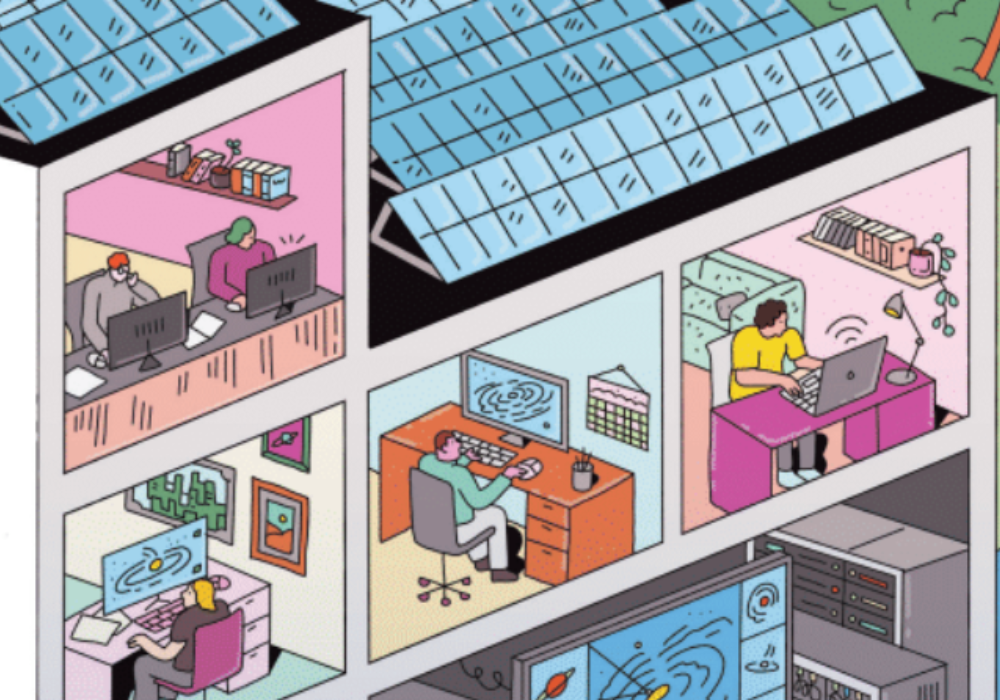
A virtual power plant is a collection of devices – home batteries, electric water heaters and vehicles, solar panels – connected to each other and to the grid. Combined, these multiple small energy sources form a network that acts as a power plant, supplying electricity to the grid when demand surges. In addition to supply, efficiencies in energy use can also contribute to a VPP.
For example, smart thermostats alleviate stress on the grid during periods of high consumption by automatically adjusting the temperature up or down depending on whether demand is for heating or cooling.
“Using energy sources that are responsive to demand fluctuations isn’t new, but it was always done with big industrial partners,”says Brendan Haley, senior director of policy strategy at Efficiency Canada. “What is new is the electrification of end uses, especially on the residential and commercial side, combined with digital technologies that allow communications to happen in real time. This enables rapid demand response.”
Many regions around the world are catching on. Vermont-based Green MountainPower sources power from solar-charged batteries, EV chargers and remote-controllable water heaters while incentivizing the use of smart thermostats. The company’s clean-energy network provides 72 megawatts of extra capacity that can be deployed in emergencies. In Germany, more than 144,000 home batteries automatically dispatch daily to help stabilize and bolster the grid in real time. Sunrun, the largest rooftop solar and home battery company in the United States, has enrolled more than130,000 systems in its VPP program. The distributed power plant supplies 480,000 homes with electricity.
Cost savings and reduced emissions
Utilities and consumers alike can realize significant cost savings by drawing on power from distributed energy sources. B.C. Hydro in British Columbia estimates that by coupling its energy-efficiencies program (Peak Saver) with a new VPP project using residential batteries for energy storage and supply, the utility will save customers as much as $80 million annually by 2030. The savings in energy will amount to more than 2,000 gigawatt-hours – enough to power more than 200,000 homes. B.C. Hydro’s director of energy management and innovation, Brandon Young, says that demand-side management and optimizing energy usage is cost effective “because the benefit to us is greater than the cost of all aspects of the generation and distribution that would be required to deliver that additional energy.”
Power plants only supply power. VPPs do that but can also store electricity and use energy more efficiently.
—Brendan Haley, senior director of policy strategy, Efficiency Canada
By shifting demand away from periods of peak usage, when the grid relies most heavily on fossil fuels, and redirecting energy consumption to times when carbon-free resources are available, distributed power plants directly contribute to lowering emissions.Again, the return on investment is compelling: a U.S. Department of Energy study found that VPPs are 40% to 60% cheaper than alternatives when it comes to managing peak demand.
Policies can obstruct growth
“VPPs provide more benefits than a conventional power plant,” Haley points out. “Power plants only supply power. VPPs do that but can also store electricity and use energy more efficiently.”
Ontario’s Independent Electricity System Operator (IESO) now runs a program called Save on Energy Peak Perks. Participants permit their utility to adjust their home thermostat up to 2°C during periods of peak electricity demand from June1 to the end of September. IESO reports that up to 90 megawatts are saved each time thermostats are activated – roughly equivalent to taking a mid-sized city off the grid.
Despite the benefits, regulatory regimes are a roadblock to expansion. In Canada, there is no requirement that customer-side sources be optimized.
“In states like Massachusetts, they’re required to invest in all energy efficiency that’s cost effective before paying for a supply-side measure or power plant,” Haley notes. “There’s no utility in Canada that has a similar rule, which, essentially, requires the demand-side option be considered first before a supply-side option.”
Indeed, capitalizing on small pools of existing power sources – before building out more infrastructure or firing up natural gas plants – may turn out to be key to helping the grid address its biggest challenges.
Victoria Foote is a writer and editorwho specializes in clean energy and climate.
The Weekly Roundup
Get all our stories in one place, every Wednesday at noon EST.