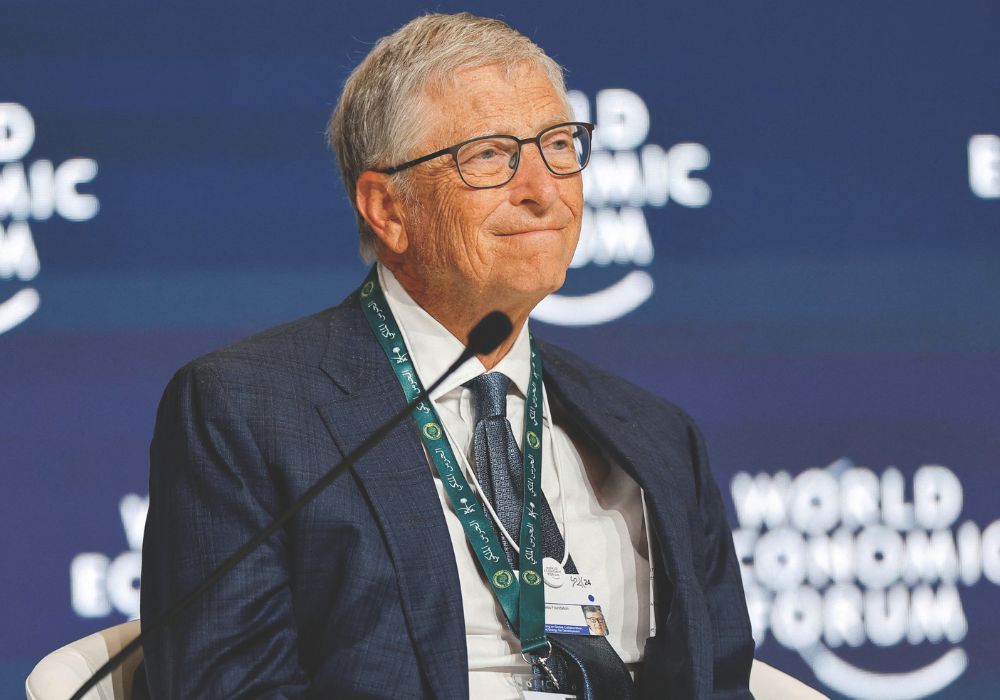
It was the reset heard around the world. On October 28, on the eve of the COP30 climate conference, Microsoft cofounder and philanthropist Bill Gates announced that climate change is no longer an existential threat.
In a public letter entitled “Three Tough Truths about Climate,” Gates said that carbon-emission projections are heading down and that climate change will not turn Earth into a fiery hellscape. “People will be able to live and thrive in most places on Earth for the foreseeable future,” Gates wrote.
“To be clear: climate change is a very important problem. It needs to be solved,” he wrote. But “the biggest problems are poverty and disease, just as they always have been,” he added. “Improving lives” is more important than “emissions and temperature change.”
Gates’s assessment turned heads, coming from a man who wrote a book called How to Avoid a Climate Disaster. His true passion is human health. His Gates Foundation has invested US$50 billion to improve global living standards and combat diseases. But when the Trump government is pushing “American energy dominance” through fossil fuels, Gates’s manifesto seemed dangerously counter-productive.
Climate deniers couldn’t wait to mangle Gates’s message. “Huge victory,” Florida lawyer Rogan O’Handley crowed to two million followers on X: “Bill Gates & the climate-change alarmists are finally admitting humans will be just fine.” A Fox News panel responded to Gates’s letter by concluding that “we need abundant fossil fuels, and cheap – that’s how we lift people out of poverty.”
Climate supporters fought back, noting that health and climate are inextricably linked. We can’t address health without targeting climate. Gates’s memo “redefined the concept of bad timing,” noted U.S. climate scientist Michael Mann, whose co-authored study A Planet on the Brink came out the same day as Gates’s letter. Mann’s warning that we are hurtling toward climate chaos got scant attention.
But there could be another force at work: a cycle of confirmation bias. In 2024, Scottish data scientist Hannah Ritchie published a book called Not the End of the World: How We Can Be the First Generation to Build a Sustainable Planet. On page 1 Ritchie writes, “It has become common to tell kids that they’re going to die from climate change.” Her alternative message is that fixing the climate will be hard, but it’s doable. Gates called the book “eye-opening and essential.” In November, he named Ritchie’s latest book, Clearing the Air, one of his top five books of the year.
Veteran U.K. climate activist Jonathon Porritt questions the work of both Gates and Ritchie. In a 2024 article, he ripped into Not the End of the World for Ritchie’s selective use of statistics and her “banal evocation of ‘hope’ as our best tool in the fight against climate change.” Her naïveté, he said, “is quite staggering.”
Still, Gates was hardly the first voice to dial down the climate emergency in 2025. In April, former U.K. prime minister Tony Blair fronted a report called The Climate Paradox in which he wrote that “any strategy based on either ‘phasing out’ fossil fuels in the short term or limiting consumption is a strategy doomed to fail.” And in Canada, Prime Minister Mark Carney – the UN’s former special envoy for climate action and finance – is touting Canada’s energy resources to the world – including oil and gas, and maybe a new oil pipeline. These debates will likely heat up in 2026.
We want to know what you think about these developments. Please feel out this short survey to share your perspective.