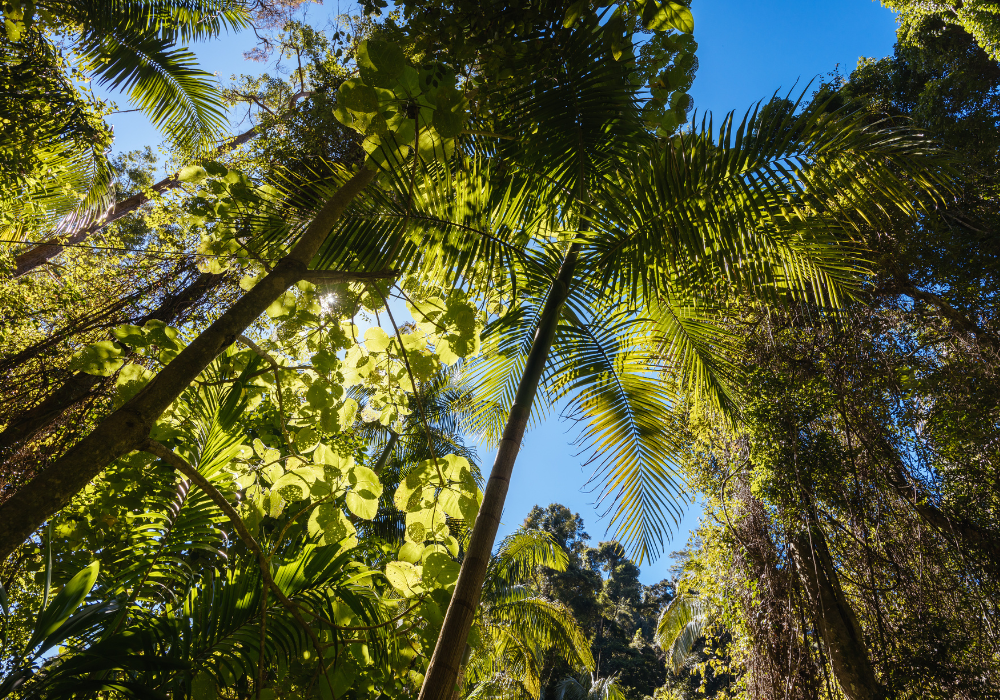
An international endowment fund to help save the world’s tropical forests – a massive yet vulnerable part of the earth’s defences against global warming – received lukewarm financial support from delegates at the world’s COP30 climate summit in November.
But that doesn’t mean the project is dead.
Climate action groups, governments, development agencies and even some banks and investors are holding out hope that the trail-blazing fund – known as the Tropical Forest Forever Facility (TFFF) and spearheaded by COP30 host Brazil – can become a reality, providing billions of dollars annually to halt tropical deforestation.
“This is a landmark moment for nature and climate finance,” Kirsten Schuijt, director general of the World Wildlife Fund, said in a statement. Ani Dasgupta, CEO of the World Resources Institute, said the fund “has real potential to be a breakthrough for the world’s forests.”
Yet only a handful of COP countries pledged to invest in the fund, totalling $6.6 billion in initial capital, well short of the $25-billion target for government contributions set by Brazil. Brazil is aiming to raise a further $100 billion in private money from asset managers, investment funds, private investors, philanthropic organizations and corporations, for a total fund size of $125 billion. (All funds in U.S. dollars.)
The initial contributors included Norway, Brazil, Indonesia, Germany, France, Colombia and Portugal. These countries pledged to invest in the all-important first tier of TFFF’s capital, money that would be used to provide first-loss guarantees to cushion private investors against losses.
Despite the small initial contribution, 53 countries endorsed the concept, suggesting there could be more public money to come. The European Bank for Reconstruction and Development and the Asian Infrastructure and Development Bank – two of the world’s largest development banks – are also considering investment in the fund, according to the Devex media platform on international development.
And Daniel Hanna, head of sustainable and transition finance for Barclays, said the British-based bank is looking to support the fund through bond underwriting services. Underwriting is a critical part of the process to sell bonds to institutional investors. “I remain very optimistic around the TFFF moving forward,” Hanna said.
Forests are ‘worth more standing than felled’
The fund was one of the signature projects announced by Brazil at this year’s COP, which was held in the Amazon rainforest city of Belém. The concept was held out as a way for private finance to ramp up support for forest and climate protection while addressing inequalities between the Global North and South.
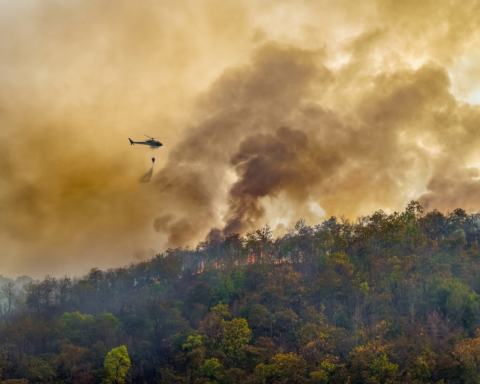
Tropical forests are suffering severe deforestation from commercial agriculture (particularly from beef, soy and palm oil), logging, mining and infrastructure development, moving the forests from carbon sinks to carbon sources. The fund would be an endowment to provide permanent funding to tropical nations to keep their existing forests intact. “It is an unprecedented initiative,” said Brazil President Luiz Inácio Lula da Silva in launching the fund at COP. “Forests are worth far more standing than felled.”
The fund plans to invest in government and corporate bonds (excluding bonds in fossil fuels and environmentally destructive sectors) primarily in developing countries.
The fund is also based on a “blended finance” model. The sponsor money from governments would provide a reserve against losses by private investors, mitigating the risk of placing capital in higher-interest investments. This would enable the fund to attract capital from a broad range of market players such as pension funds, asset managers and investment funds.
The total target return is 7.6%. Investors would receive the lion’s share of this income (targeting a 4.9% return), and the remaining 2.7% would be used to pay developing countries a fee for maintaining tracts of tropical forest within their boundaries. Penalties would be incurred for deforestation. Indigenous communities on those lands would receive at least 20% of the funds to manage the forests.
At the target level of capitalization of $125 billion, the fund would generate $3 to $4 billion annually to be disbursed to about 75 tropical countries and their Indigenous communities. The World Bank estimates this would work out to about $4 per hectare of protected forest land.
TFFF is “quite unique and quite pioneering” in the world of blended finance, says Nick Zelenczuk, a researcher with the Toronto-based Convergence blended finance think tank. Blended finance models typically use public capital to cushion losses by private investors in higher-risk impact ventures. But rather than generating a direct return from the project, TFFF shares the proceeds of the bond fund between the forest and the investors. “Using the return from the fund to drive the incentive scheme is novel in the [blended finance] market,” Zelenczuk says.
Forest payments versus carbon markets
One of the reasons there is high interest in making TFFF work is that it is considered a more promising climate finance model than carbon markets, the option that has commanded much attention at recent COP meetings.
The idea of carbon markets is that corporations or financial institutions buy “carbon offsets” that are linked to specific volumes of carbon avoided, reduced or removed through activities such as reforestation or renewable energy. The system of accounting for these carbon volumes is not well established. The value of carbon credits is based on estimates of future carbon reductions, estimates that may be wrong to begin with or fail to meet projections. A study last year of more than 2,000 carbon-credit projects found that only 16% of the projects achieved the carbon savings claimed. As a result, corporations and investors are losing interest in carbon markets, and money for projects is drying up.
The TFFF represents an alternative focused on forest lands – not estimated carbon – which can be transparently and accurately tracked over time. If the lands become deforested, the annual payments will stop or be reduced.
“Offsets have too often been used as a license to pollute,” Australian billionaire businessman Andrew Forrest said in a statement announcing a $10-million investment in TFFF. “They categorically do not work the vast majority of times they have been independently measured. This is the opposite. The TFFF makes forest protection a strong economic choice in favour of our environment – rewarding countries that actually keep their forests intact.”
But will there be enough money?
With such a disappointing start, however, will the fund be large enough to create lasting impact? After the British government signalled early on at COP that it would not be supporting the TFFF, the project lost some momentum.
At the current level of capitalization, tropical forest nations will receive only 16 cents per hectare per year, a far cry from the $4 projected by the World Bank. But the Brazilian government believes the fund is well positioned to attract more funds. Finance Minister Fernando Haddad called the initial investment “auspicious,” anticipating that “after this first investment . . . we will have a very good start.”
Launch of the TFFF fund has come at a timely moment. The U.S. government under Donald Trump has slashed development assistance and decimated its international development agency, USAID. Other countries like the United Kingdom are also cutting assistance to poor countries. At the same time, market-based approaches like carbon credits have fallen out of favour.
A third way is needed. TFFF represents a new approach, one that uses the financial power of the markets to create a very non-market outcome, the survival of the world’s tropical forests.
Eugene Ellmen writes on sustainable business and finance. He is a former executive director of the Canadian Social Investment Organization (now the Responsible Investment Association).
The Weekly Roundup
Get all our stories in one place, every Wednesday at noon EST.