
On a sunny September afternoon in 2023, the Laura Maersk sat stationed in the harbour of Copenhagen, dwarfing everything around her. With a gleaming blue prow, colourful nautical flags and the words “ALL THE WAY TO ZERO” blazed across her forecastle, Laura prepared to set forth across the Baltic Sea: the world’s first container ship to run on green methanol.
The Laura Maersk says a lot about her country of origin. Denmark, the Nordic nation of some six million people, is a leader in clean technology, emission reductions and the energy transition. It is home to an extraordinary number of sector-leading companies whose sustainability performance soars above global standards. And as much of Europe and the world walk back or water down their climate ambitions, Denmark just keeps steaming ahead, a shining example of how sustainability and economic competitiveness can go hand in hand.
The most recent edition of the Climate Change Performance Index, which assesses countries’ efforts to meet Paris Agreement goals, gives Denmark the top ranking of all jurisdictions it surveys: 63 countries plus the European Union. The index looks at greenhouse gas emissions, energy use, renewable energy and climate policy. Denmark’s climate minister, Lars Aagaard, hammered this home when he announced, at COP30 in Brazil last November, that his country was setting itself one of the most ambitious emissions targets in the world: an 82% reduction from 1990 levels by 2035, blowing past the EU’s broad goal of something between 66.3% and 72.5% by that same year. Canada, by comparison, has pledged to reduce emissions by 45% and 50% of 2005 levels by 2035. These aren’t just grand aspirations from Denmark: it is currently on track to meet its 2030 emissions goal and seems within reach of climate neutrality by 2045, five years before the EU.
So how does Denmark do it? What combination of factors has enabled the country to reduce emissions, excel in clean technology, cultivate broad public support for ambitious climate and sustainability policy while, at the same time, maintaining the fourth-highest gross domestic product per capita in Europe? “There’s a saying in Danish: ‘If two Danes meet, they shake hands. If three Danes meet, they form an association,’” says Gert Tinggaard Svendsen, a professor of political science at Aarhus University and an expert in social capital and climate policy. Svendsen believes that Denmark’s ability to problem-solve quickly and to rally around the collective good is rooted in something quite intangible.
Social trust – faith in the words and deeds of other people – runs exceptionally high in Denmark: when surveyed, 75% of Danes claim to trust others, well above the Organisation for Economic Co-operation and Development average. Svendsen traces the attribute back to the seafaring Vikings of the early medieval period, who plied the world’s oceans in search of trading opportunities. Largely illiterate, they cemented deals with handshakes: an informal way of doing things that rewarded honesty and “created a norm for good behaviour,” as Svendsen puts it. He sees that same pragmatism and bedrock of social trust as the basis of Denmark’s energy transition, citing as an example the astonishing transformation of the island of Samsø. Facing a rising tide of out-migration and unemployment, the 4,000 residents of this small island off the Jutland peninsula decided, in 1997, to go all in on renewable energy. Through the installation of 11 onshore and 10 offshore wind turbines, four biomass-fuelled district-heating plants and solar panels, a wholescale reduction in energy consumption, and conversion to electric vehicles, the island was able to run entirely off renewables by 2007: a first in the world.
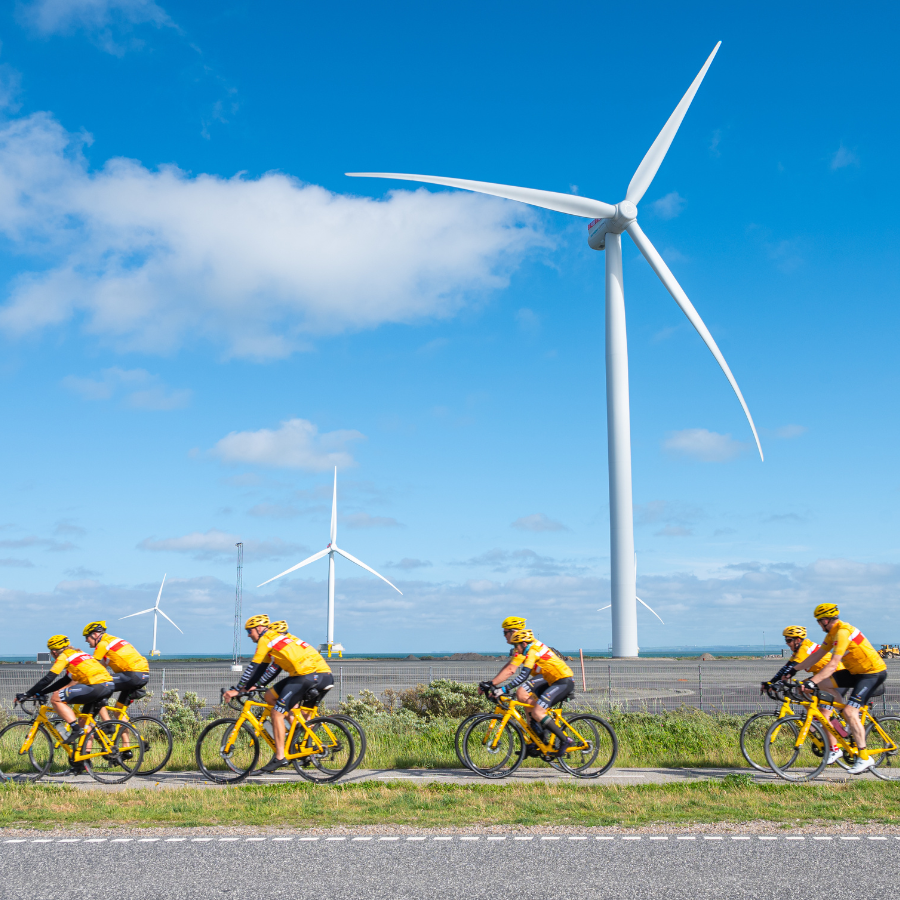
Key to the success of this project, and Denmark’s energy transition more broadly, has been the prioritization of local ownership and direct economic participation. On Samsø, the rule was if you could see a windmill from your home, you had the right to invest in it. Turbines, once viewed as visual blights, were suddenly retirement plans. This shift in mindset has been key to the Danish energy transition. In 1996, when Copenhagen’s municipal energy utility launched what was, at the time, the world’s largest offshore wind farm project, it invited locals to participate. The 8,650 members of the Middelgrunden Wind Turbine Cooperative raised half the project’s construction costs and continue to own half the project. It’s a prime example of the Danish public–private partnership, aligning government policy with private capital and community ownership. Wind energy in Denmark, which now accounts for 60% of the country’s electricity – the highest per capita generation in the world – has been built on the model; since 2009, Danish law has mandated that 20% of all new projects be community-owned.
There’s a saying in Danish: ‘If two Danes meet, they shake hands. If three Danes meet, they form an association.
— Gert Tinggaard Svendsen, a professor of political science at Aarhus University
Local ownership means that the benefits of renewables are directly felt, and this has engendered a sense of civic pride in Danes, who view the energy transition less as a mandated concession to planetary limits than an exciting opportunity. Copenhagen’s new power plant, which converts municipal waste to both heat and electricity, takes pride of place on the city’s waterfront. Designed by the Danish architectural Bjarke Ingels Group, the eye-catching building, which opened in 2017, features a ski hill on its sloping roof and a climbing wall on its aluminum facade: a model of what Ingels calls “hedonistic sustainability.”
Sustainability has become Denmark’s brand. Since 2019, its foreign ministry has explicitly put green diplomacy at the centre of its foreign, trade and development policy. As current holder of the Council of the European Union presidency, Denmark has been framing the energy transition – and dissociation from Russian oil – as a security imperative. It also continues to nudge international organizations toward greater climate ambition.
Which brings us back to the Laura Maersk, the methanol-fuelled container ship. As the sixth-largest shipping nation in the world, Denmark has been pushing the International Maritime Organization to adopt regulations that will make global shipping, which currently accounts for some 2% to 3% of the world’s greenhouse gas emissions, net-zero by 2050. Laura’s launch reflected Denmark’s determination to meet this goal. It also highlights a feature of Danish corporate culture that has made the country’s private sector more committed to sustainability than most.
Like several of Denmark’s most successful companies, Maersk is owned by a foundation. According to Steen Thomsen, professor of corporate governance at the Copenhagen Business School, 1,400 such enterprise foundations are registered in Denmark, among them roughly 20 multinationals, including Maersk (officially A.P. Møller-Maersk), brewer Carlsberg, pharmaceutical giant Novo Nordisk and water pump manufacturer Grundfos. In an inverse of the North American model – where companies set up foundations to run arm’s-length philanthropic projects in their names – Danish enterprise foundations run their companies, by holding a majority of their shares, voting rights or both. (Enterprise foundations exist outside of Denmark as well – Ikea in Sweden, Bosch in Germany, Rolex in Switzerland, Tata in India to name a few – but Denmark is home to the highest concentration.)
As Thomsen explains, enterprise foundations are, by their very nature, inclined to invest more in research, be better employers and perform more responsibly on environmental and social fronts than their publicly owned peers. “The foundation has a dual purpose: to be a good long-term owner and to practise some form of philanthropy,” Thomsen says. “It can’t be schizophrenic. It can’t very well exploit its labour force, then turn around and donate to poverty reduction.”
The prevalence of enterprise foundations in Denmark has shaped its economy in fundamental ways. For one, it has meant that the country’s 1% has been less tempted to participate in extravagant personal (and carbon-intensive) consumption – private jets, fancy cars, holiday homes and the like – and more likely to invest in a family enterprise or foundation that will outlive them. (Thomsen says the enterprise foundation model is, in large part, a function of Denmark’s historically high wealth taxes.) It has also meant that Danish companies have been more committed to long-term, collective gain than most – from Carlsberg founder J.C. Jacobsen’s sharing of the discovery of yeast purification with brewers across Europe in 1883, through Maersk’s more recent investment in the research and development of technologies to accelerate shipping decarbonization.
The Danish model may be difficult to reproduce elsewhere, but it does serve as inspiration, as evidence of what can be made possible. When the Laura Maersk first launched, there was some grumbling about the future of decarbonized shipping, given the limited supply of green methanol. Last May, a joint Danish–Japanese consortium cut the ribbon on the world’s first commercial-scale green methanol plant in southern Denmark. Among the customers for its methanol, which is produced with renewable energy and carbon dioxide captured from waste incineration and biogas plants, as opposed to fossil fuels, are Novo Nordisk for its insulin injection pens and Lego for its plastic blocks. Laura was also at the plant’s opening, waiting to tank up.
Naomi Buck is a Toronto-based writer.
The Weekly Roundup
Get all our stories in one place, every Wednesday at noon EST.